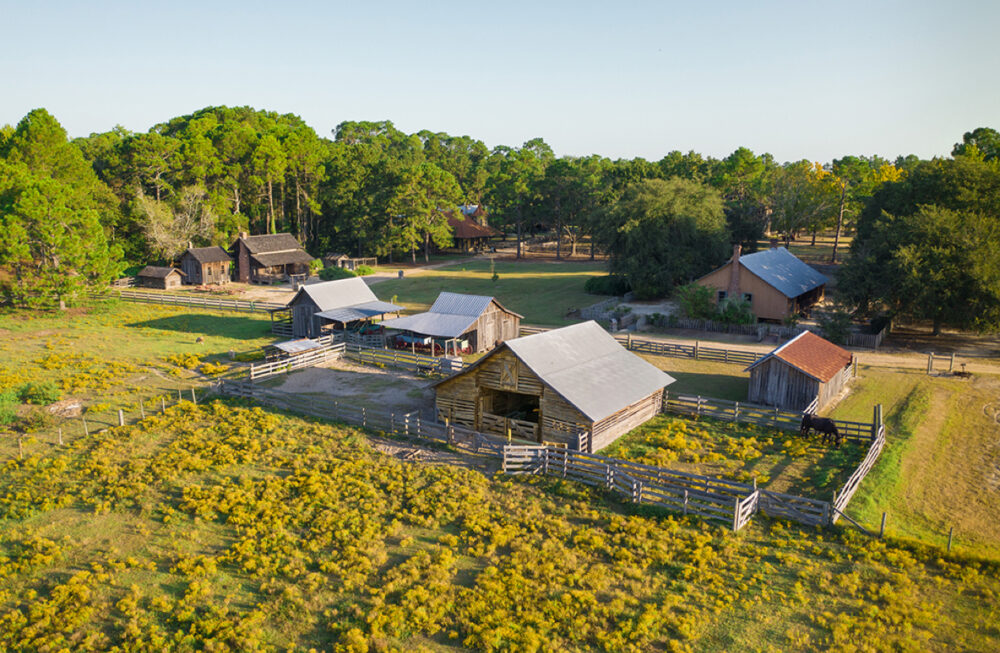
Gibbs Farm - 1889
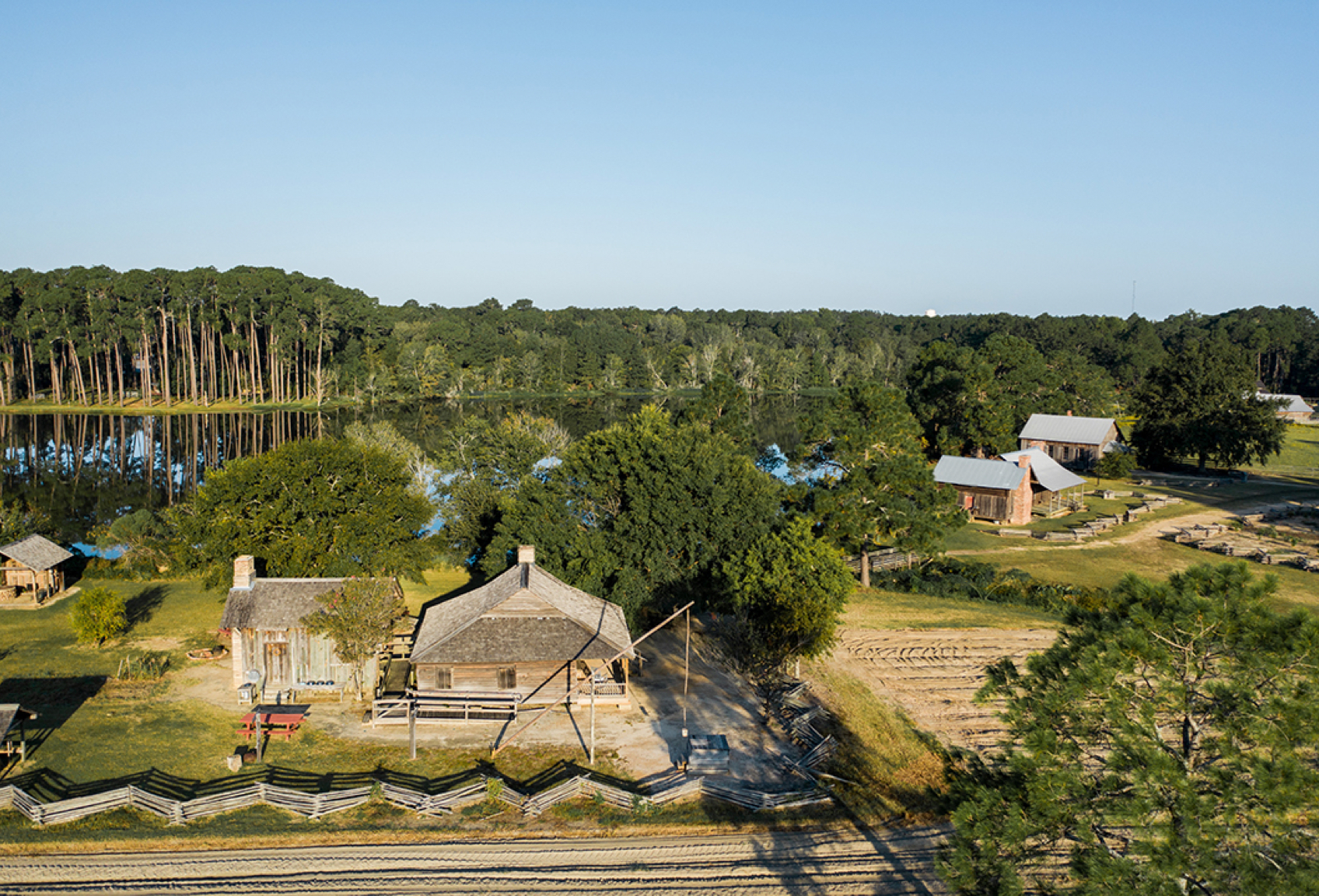
The Gibbs Farm includes a barn, pens, buggy shed, and harness room. The farm buildings are arranged along the same basic layout of the original Allen Gibbs farm. The barn at the progressive farmstead is modeled after a Miller County “mule barn” built in 1889. The corn crib and harness room were built about 1880 on a farm near Lenox, Georgia and donated by John and Mona Darden. This restored structure seasonally holds ear corn and other feed and shelters tools and implements from the weather. The livestock kept on the farm are representative of the common farm animals of the time period. “Piney woods rooter” hogs, “native” sheep, goats, dairy cows, horses, and mules are the chief tenants of the barnyard (note: all animals are not represented at all times).
Gibbs House - 1896
The Gibbs House is called progressive because the family that built and lived in the house of this type tried more scientific methods of farming and used more advanced tools and utensils than those who occupied a home such as the Clark Cabin (the traditional farmstead). The Gibbs House was built by Allen Gibbs about 1896 near Ty Ty, Georgia, which at the time was part of Worth County. Mr. Gibbs had 14 children by two wives. The farmhouse was donated by his children, Mr. Nas Gibbs, Mrs. Elizabeth Monk, and Mrs. Mary Paulk. The architectural details and furnishings of the house reflect a rural style of living recognizable as the trends and tastes of the 1890s. The Gibbs House utilizes a wood-burning stove that was easier to use than open-hearth cooking. Cooking was not only safer than, but not quite as hot as, open-hearth cooking because the fire was contained in the stove. The Gibbs House farmstead includes a number of outbuildings, including a smokehouse (where meat was cured after butchering), a syrup house and cane mill (where syrup was made), a hen house, and an outhouse.
Cravey House - 1880s
David Grist Mill - 1879
Continue Exploring